
All articles
As Agentic AI Expands In Operations, Trust And Guardrails Decide How Far It Can Scale
Nachiket Mehta, Vice President of AI and Data Engineering at a leading financial services firm, outlines how agentic AI shifts routine execution to machines while elevating human judgment.

Key Points
As agentic AI begins to initiate and execute work, it creates a new operational model that shifts routine tasks away from humans.
Nachiket Mehta, a Vice President of AI and Data Engineering in financial services, shows how trust, guardrails, and thoughtful design determine whether this shift scales safely.
He points to a future where agents handle execution while humans focus on judgment, oversight, and the soft skills that define real value.

Trust is the stepping stone. If it breaks, it's very hard to rebuild, and that will slow down how fast agents can start doing more of the work on their own.
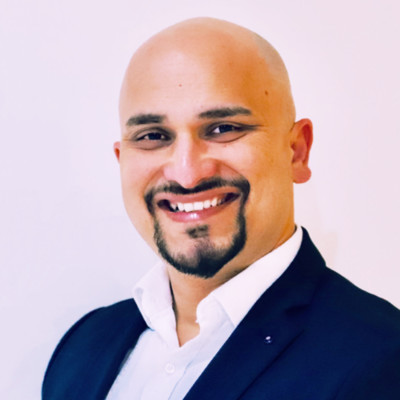
Nachiket Mehta
Artificial intelligence is moving beyond its role as a mere responsive tool. A new phase of automation is taking shape as AI systems begin to initiate and execute work, pushing enterprises toward a more proactive model that's already shifting how operations run. The idea of a one-person unicorn captures the potential, a billion-dollar company run by a single founder and powered by agents that handle the day-to-day execution. The change is already well underway, moving humans away from rote execution and toward roles centered on judgment, oversight, and boundary-setting.
Nachiket Mehta is the Vice President of AI and Data Engineering at a prominent financial services firm, and he has spent his career building the systems behind this shift. With two decades in technology and data leadership, including a tenure as Head of Data and Analytics Engineering at Wayfair, he has a history of turning advanced ideas into real operational impact. His perspective comes from working at the point where technical execution meets strategic vision.
"Right now, humans are driving agents, but the future may be agents doing the automated work and reaching out to humans only when they are stuck," Mehta says. But this future depends on a delicate balance. Mehta situates the evolution within a classic technology hype cycle, where progress is vulnerable to perception.
He points to what he calls the "Tesla effect," where one bad AI-related accident generates 100 times more negative publicity than countless human errors, showing just how fast public confidence can be damaged. This dynamic, he explains, makes trust the most important—and the most fragile—asset.
The trust fall: For this new model to be sustainable, the focus must be on designing systems that can earn and maintain public confidence. "Trust is the stepping stone," Mehta says. "If it breaks, it's very hard to rebuild, and that will slow down how fast agents can start doing more of the work on their own."
Access vs. authority: Mehta explains that the focus should move beyond foundational legal boundaries like GDPR and toward designing ethical guardrails built directly into the systems themselves, ensuring that AI is deployed with safety and security at the forefront. "AI opens the door to truly impressive hyper-personalization, but you can't cross that thin line between access and authority." He points to an example where an agent is able to review a person's financial accounts and offer guidance, but the action must remain strictly with the human.
In his previous role at Wayfair, Mehta watched this philosophy play out as new training tools streamlined employee onboarding. It marks a wider trend in how technology is reshaping day-to-day training and employee upskilling.
Training on tap: What used to be a long, resource-heavy onboarding cycle collapsed once the company built an AI clone of its lead trainer. The clone could deliver every standard operating procedure on demand and switch languages instantly, removing barriers that had slowed hiring for years. "All the knowledge sits in one place now, and it's always available," notes Mehta. "You don’t have to wait for a trainer, you don’t have to schedule anything, and you don’t have to worry about language or location." It's a transformational AI application that streamlines onboarding in perpetuity.
Mehta explains that the rise of agentic workflows prompts leaders to redesign processes to elevate human roles. The change delegates rote execution to machines through intelligent automation, allowing people to focus on uniquely human skills, which AI can only fake.
"Hard skills can be easily automated because they are coded processes and steps, like programming or design. The reason we as humans are unique is our ability to combine these hard skills with soft skills like empathy and judgment," Mehta concludes. "That combination is what delivers real value, and it’s something machines cannot replicate."