
All articles
AI Transforms CISO Role from Compliance Enforcer to Strategic Data Partner
Ravi Thatavarthy, a 4x CISO and industry veteran, explains how AI data risk transforms the CISO from a compliance function to a core business partner.

Key Points
The enterprise push to adopt AI has created complex new data risks across the entire vendor supply chain, transforming the CISO's role into that of strategic business enabler.
Ravi Thatavarthy, four-time CISO, explains why the CISO is uniquely positioned to understand and manage AI risk.
Describing the modern CISO as a "de facto data officer," Thatavarthy shares real-world examples of how CISOs can advance business goals by improving efficiency, removing operational friction, and delegating controls.

As AI significantly expands data risk, the CISO stands out as the executive best equipped to understand and govern that risk.
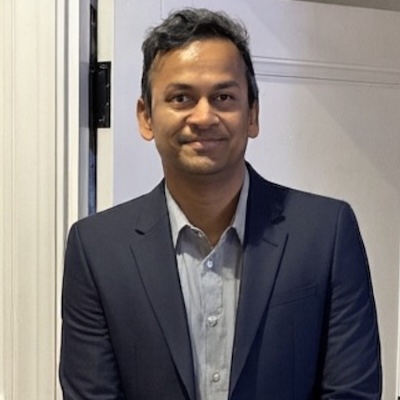
Ravi Thatavarthy
The enterprise push into AI is creating a new class of data governance problems. Now, rather than theoretical concerns, issues such as data provenance, inference risk, vendor boundaries, and customer disclosure are daily operational realities. For many Chief Information Security Officers, this new reality is expanding the mandate. Now, the role is evolving from a compliance function to a core business partner, with the visibility and authority to manage the full AI risk lifecycle.
We spoke with Ravi Thatavarthy, 4X CISO with over 25 years of experience leading security transformations at major companies like BJ's Wholesale Club and iRobot. Thatavarthy has witnessed the CISO role’s entire journey, and today, the Certified Information Systems Security Professional (CISSP) sees AI as the catalyst driving the final step in this transformation.
"As AI significantly expands data risk, the CISO stands out as the executive best equipped to understand and govern that risk," Thatavarthy says. In turn, this expansion of responsibility is driving a change in organizational design. But this strategic position didn't come about overnight.
The CISO role did not begin as a business-facing function. It emerged from infrastructure operations and, over time, adapted as organizations redefined technology leadership. As CIOs increasingly focused on digital products, innovation, and customer experience, responsibility for foundational technologies often shifted—reflecting a deliberate evolution in infrastructure and security leadership rather than a reduction in importance.
From tech to target: At the same time, increasing boardroom accountability created an opportunity for the CISO to step in and take ownership of all internal IT risk, expanding their role beyond infrastructure security to encompass overall technology risk management. "In many organizations, security efforts became optimized to meet audit and regulatory expectations, with the CISO role introduced primarily to centralize accountability. Over time, this framed the CISO as the primary point of responsibility when incidents occurred, rather than as a strategic partner in managing enterprise risk," Thatavarthy says.
The logical successor: Having moved beyond a reactive posture, the CISO is now the most logical executive to own the security of the core infrastructure on which the business operates, Thatavarthy explains. "Infrastructure ownership can no longer be meaningfully separated from risk ownership, requiring closer alignment between technology, security and infrastructure leadership."
For Thatavarthy, this thesis is especially evident in e-commerce, where AI-driven personalization is fast becoming a competitive necessity. To power these experiences, many companies have built a unified data foundation that collects every click and query. Now, with AI processing all that data in real time across a vendor supply chain, CISOs are taking on business continuity planning and becoming de facto risk and data officers.
Follow the data: "Data analytics isn't just happening within our own walls," Thatavarthy explains. "It's flowing to third-party processors, which dynamically process the information and return conclusions. The security nightmare is maintaining transparency across that entire chain, ensuring the customer is informed about both the data we collect and how our partners handle it.”
In contrast to e-commerce and personalization, where innovation often takes center stage, healthcare places greater emphasis on managing risk. The protection of patient data is a core priority, and cybersecurity considerations are ever present. At the same time, delivering on the promise of AI, from identifying harmful drug-to-drug interactions to broader applications requires careful navigation of regulatory frameworks, a responsibility that increasingly falls to the CISO.
Regulated results: The moment calls for a new AI risk-scoring framework, Thatavarthy says. "How do we inform a patient that AI, not a pharmacist, made a decision about their health? Answering this question is critical, and the security leader is uniquely positioned to help bring structure and clarity to this complexity, enabling the business as a true partner creating responsible AI."
For Thatavarthy, the CISO’s role is to architect a solution, such as creating isolated testing environments with de-identified data. This allows the business to build a formal process for engaging regulators, proactively demonstrating the value of an AI model to win their approval—and align with emerging AI cybersecurity guidance—before it ever touches a live customer.
But the "business partner" philosophy isn't just for boardroom strategy. It's also about fixing real-world operational headaches. By improving efficiency and customer experience, a CISO can demonstrate how security actively advances business goals.
Ultimately, this transformation underscores that the CISO’s role is no longer defined by attack prevention alone. By enabling safe experimentation, providing trusted platforms, and aligning security with operational and business objectives, today’s security leader actively drives progress
"All of this is redefining the CISO from a threat prevention function into an essential business partner," Thatavarthy concludes. "But none of it works without true partnership. Progress happens only when security and the business meet in the middle—that’s the most important part."